GitHub is a great place to learn AI.
You can find much more than just code. There are roadmaps, courses, tutorials, visual explanations, and projects that help you understand how AI and machine learning work.
In this post, I’m sharing 17 GitHub repositories that can help you learn AI, from the basics of machine learning to neural networks, transformers, and large language models.
Let’s get started!
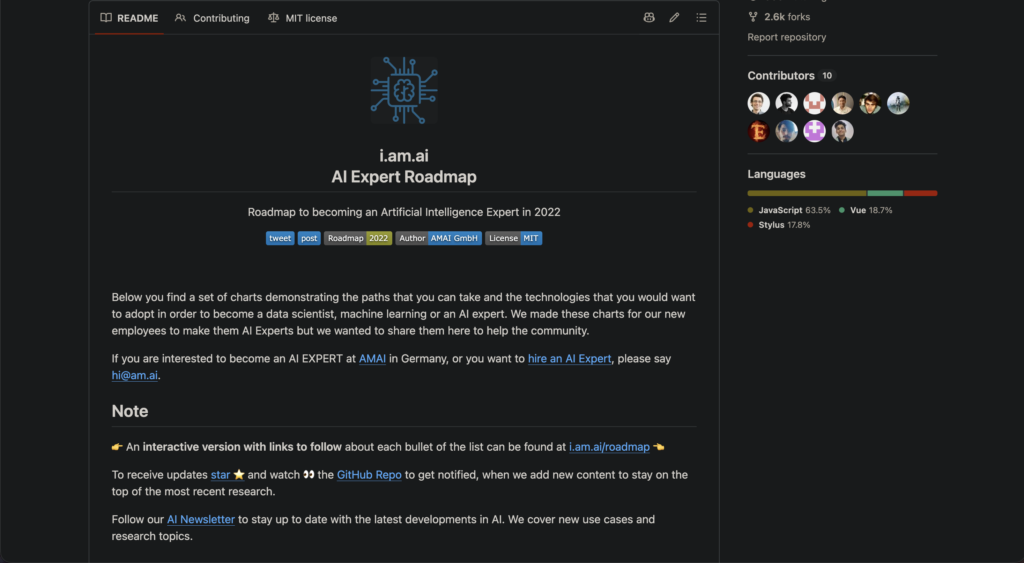
AI Expert Roadmap
If you’re not sure what you need to learn to get started with AI, then you should check out AI Expert Roadmap.
It gives you a visual path of different topics and skills you can learn.
You can use it as a starting point to understand what comes after programming and basic machine learning.
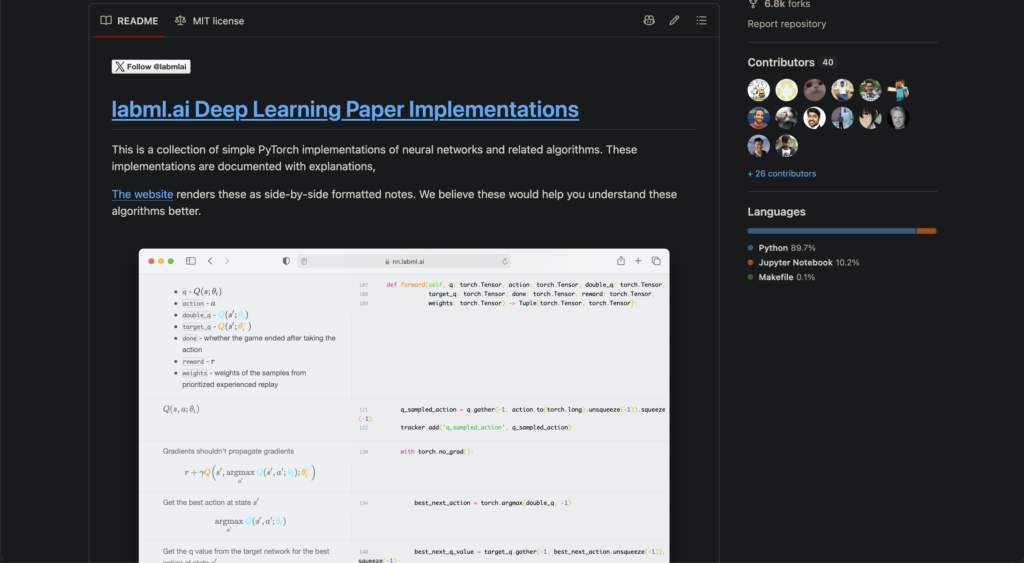
Annotated Deep Learning Paper Implementations
This repository contains implementations of different deep learning research papers using PyTorch.
The code also includes explanations and comments, which make it easier to connect the research paper with the actual implementation.
You’ll find topics such as transformers, diffusion models, GANs, and reinforcement learning.
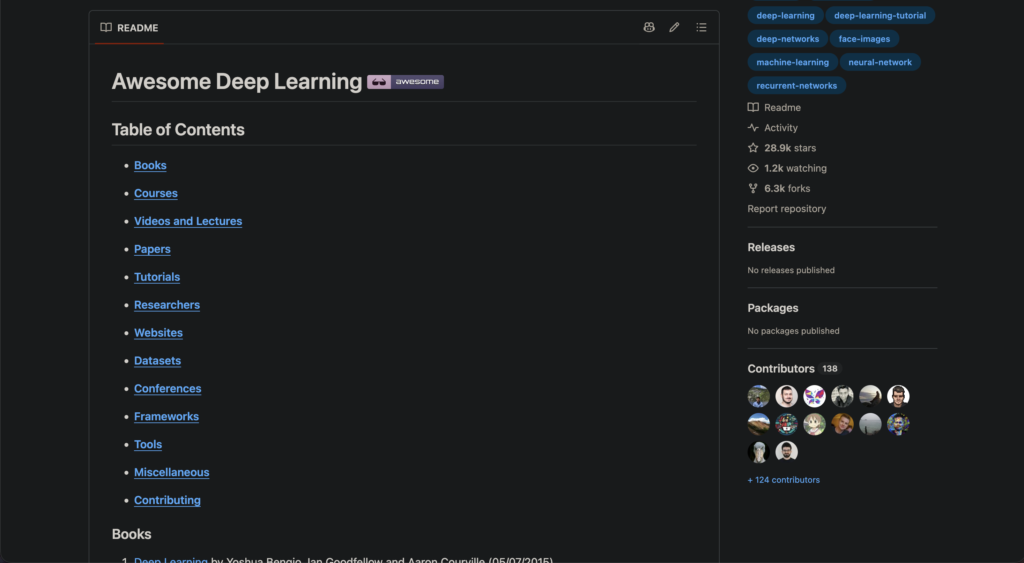
Awesome Deep Learning
Awesome Deep Learning is a collection of resources focused on deep learning.
It includes papers, courses, tutorials, frameworks, videos, and other learning materials.
You can use it to find resources when you want to learn more about a specific deep learning topic.
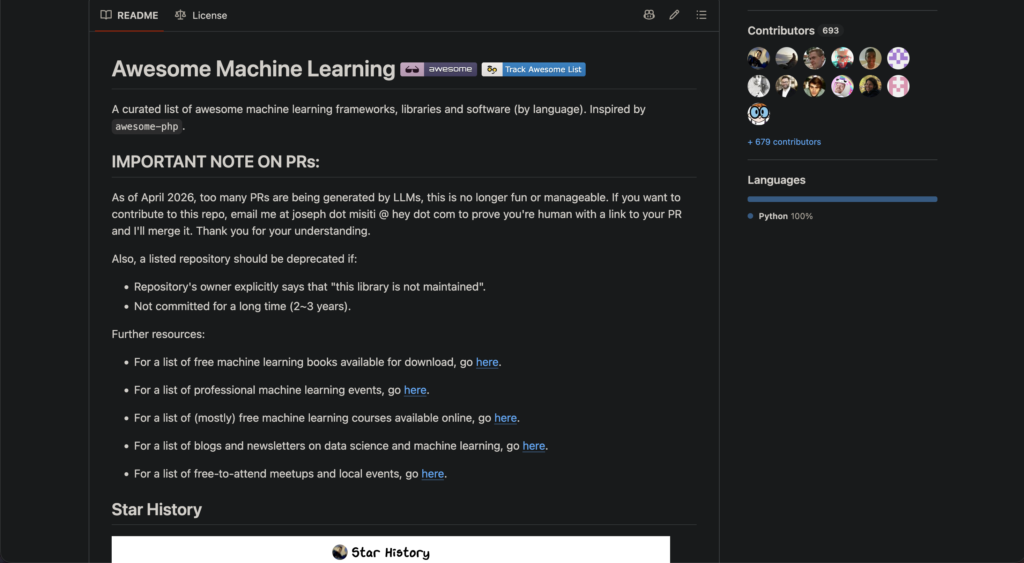
Awesome Machine Learning
Awesome Machine Learning is a large collection of machine learning resources.
You’ll find libraries, datasets, courses, books, tutorials, and other useful resources organised by category.
It’s a handy repository to bookmark when you’re learning machine learning.
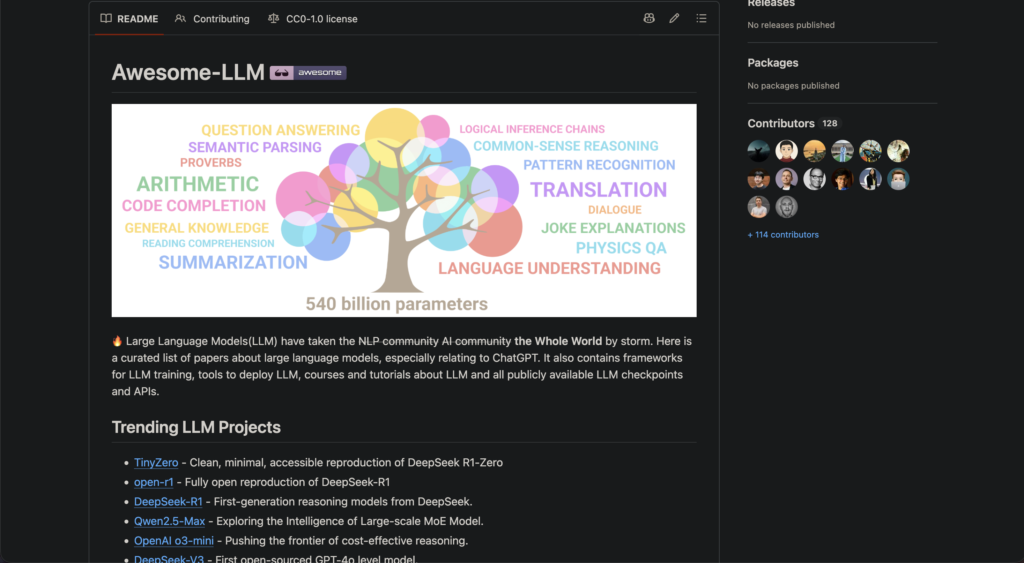
Awesome LLM
If you’re interested in large language models (LLMs), Awesome LLM is for you.
It collects useful resources such as research papers, tools, tutorials, and guides related to LLMs.
It’s a good place to explore if you’re moving from basic AI concepts into modern language models.
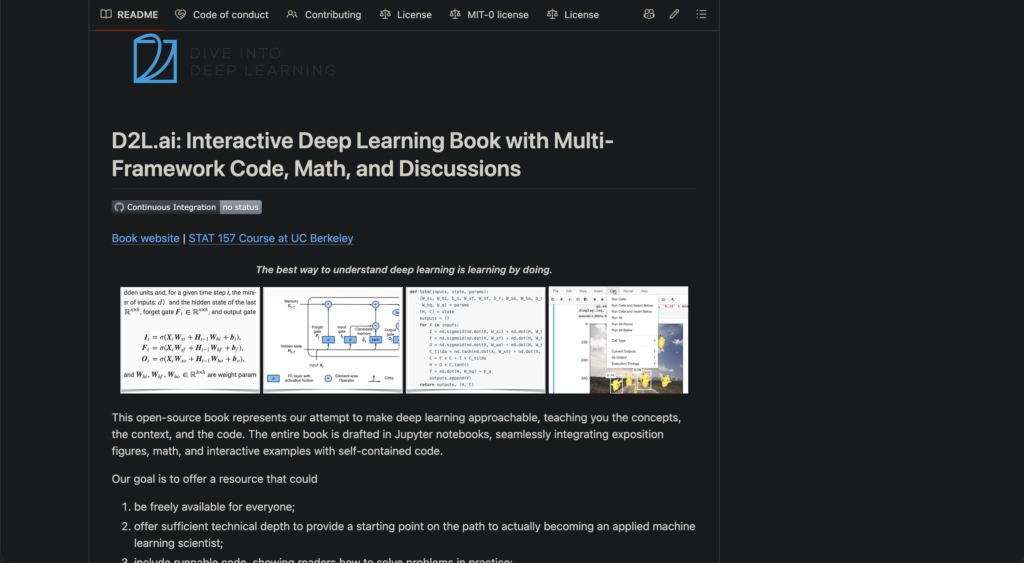
Dive Into Deep Learning
Dive Into Deep Learning is an interactive deep learning book.
It combines explanations with code examples, so you can learn a concept and try it yourself.
The repository includes notebooks and examples using frameworks such as PyTorch, TensorFlow, and JAX.
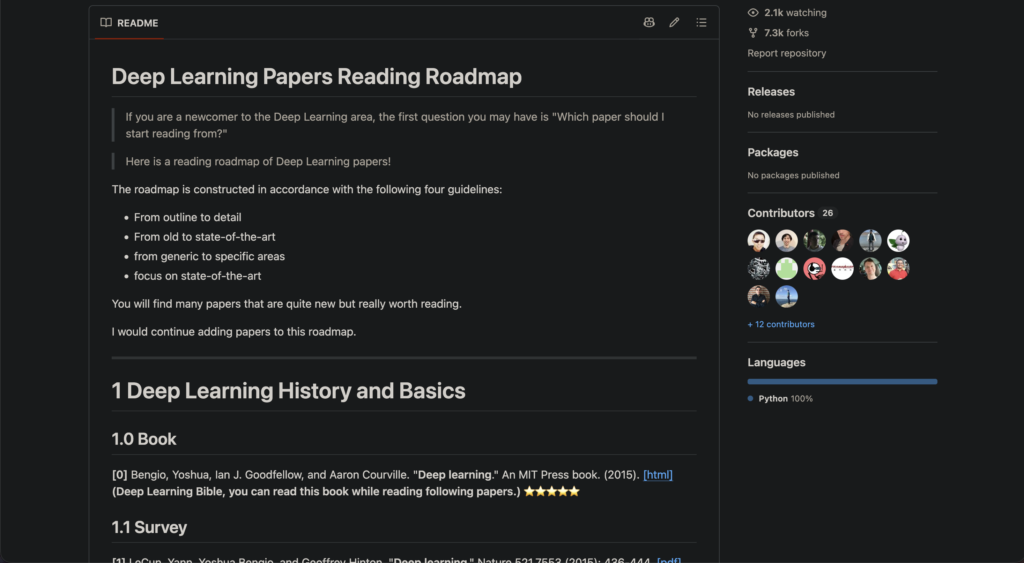
Deep Learning Papers Reading Roadmap
There are a lot of deep learning papers out there, and it can be difficult to know where to start.
This repository gives you a reading roadmap for deep learning papers.
The papers are organised by topic, making it easier to slowly explore important ideas in deep learning.
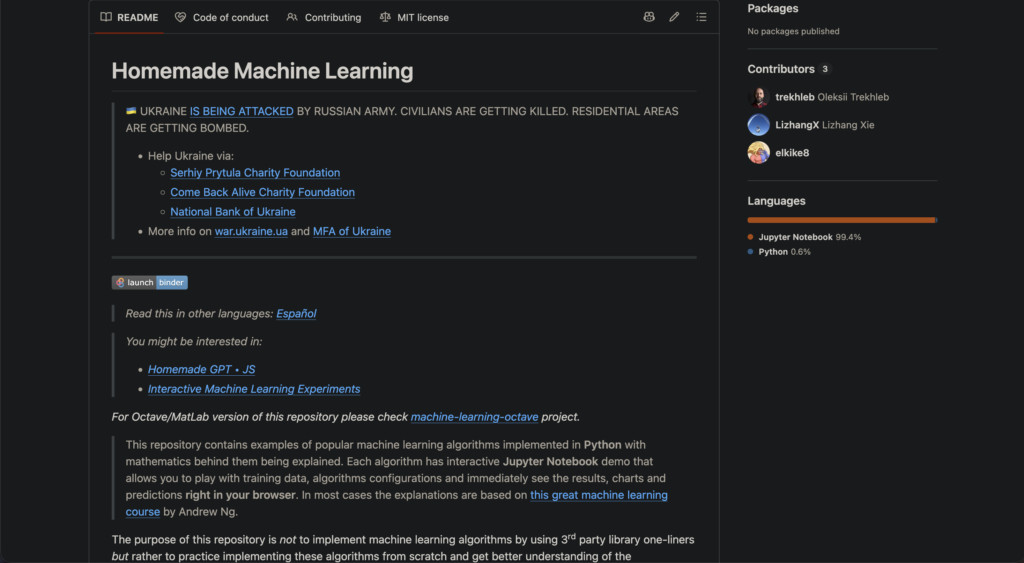
Homemade Machine Learning
Homemade Machine Learning explains machine learning algorithms using Python, Jupyter notebooks, and visualisations.
The examples make it easier to see how different algorithms work instead of just reading about them.
It’s useful if you like learning through examples and visuals.
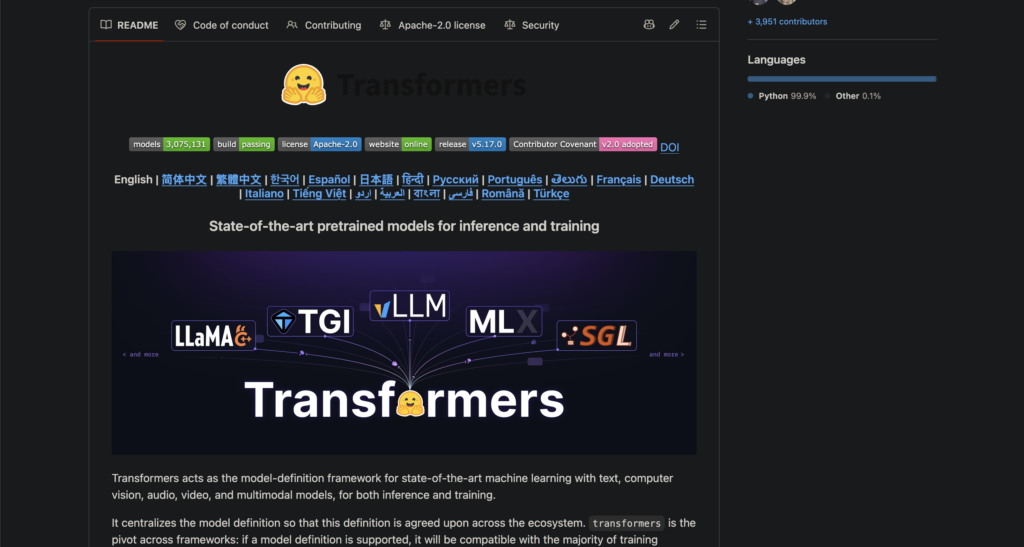
Hugging Face Transformers
Hugging Face Transformers is a library for working with many popular AI and language models.
The repository includes examples showing how to use models for tasks like text classification, translation, summarisation, and question answering.
It’s a useful repository to explore once you’re ready to work with modern transformer-based models.
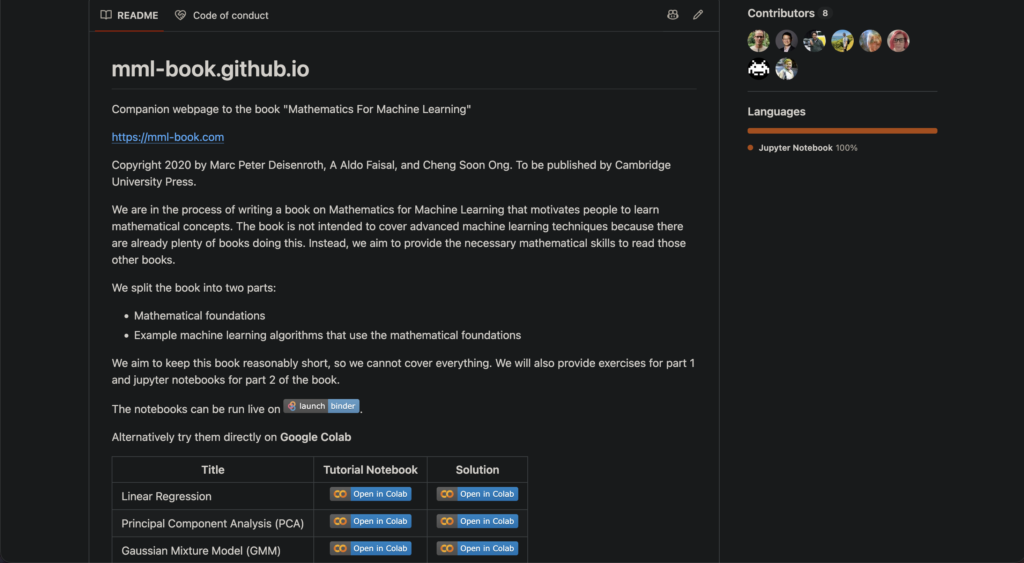
Mathematics for Machine Learning
If you want to understand the math behind machine learning, check out Mathematics for Machine Learning.
It covers topics like linear algebra, calculus, probability, and statistics.
You don’t need to learn everything at once. You can use it as a reference whenever you need help with a particular concept.
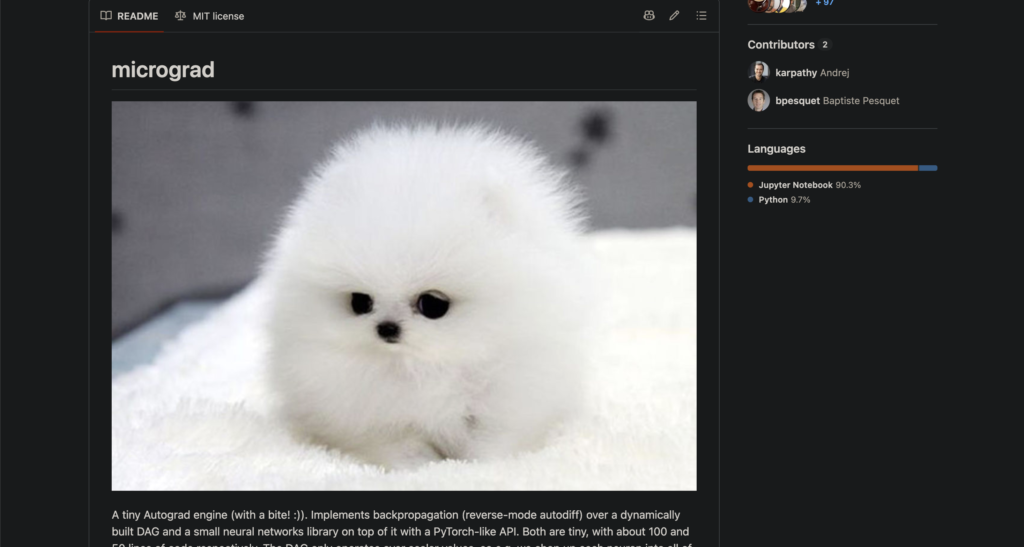
Micrograd
Micrograd is a small Python library created by Andrej Karpathy.
It implements the basic ideas behind automatic differentiation and backpropagation in a very small amount of code.
It may look simple, but going through the code can help you understand how neural networks learn.
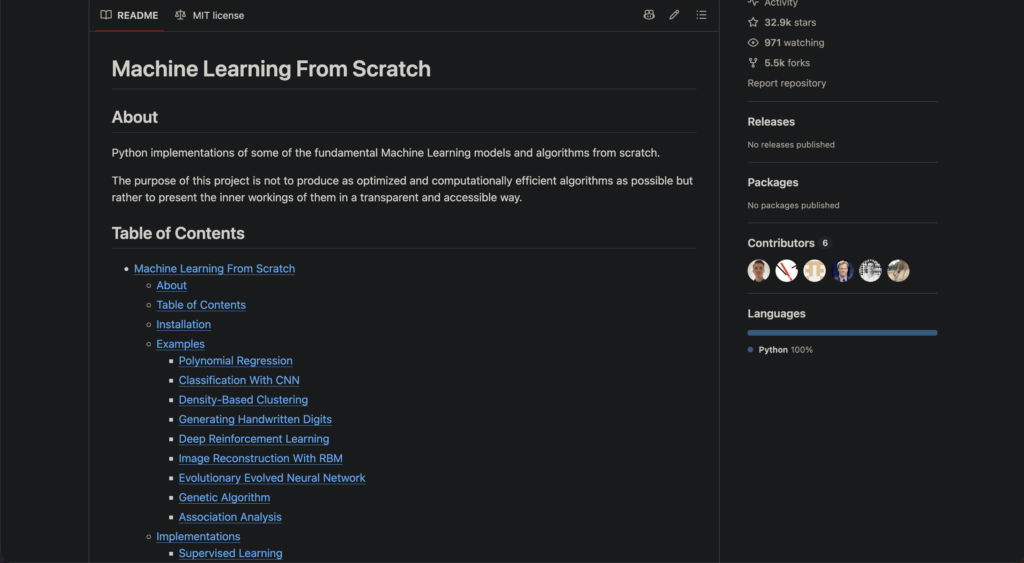
ML-From-Scratch
If you want to understand how machine learning algorithms actually work, then ML-From-Scratch is worth checking out.
It implements common machine learning algorithms in Python without using machine learning libraries.
You can explore things like linear regression, decision trees, neural networks, and k-means.
It’s a great way to understand what’s happening behind the scenes.
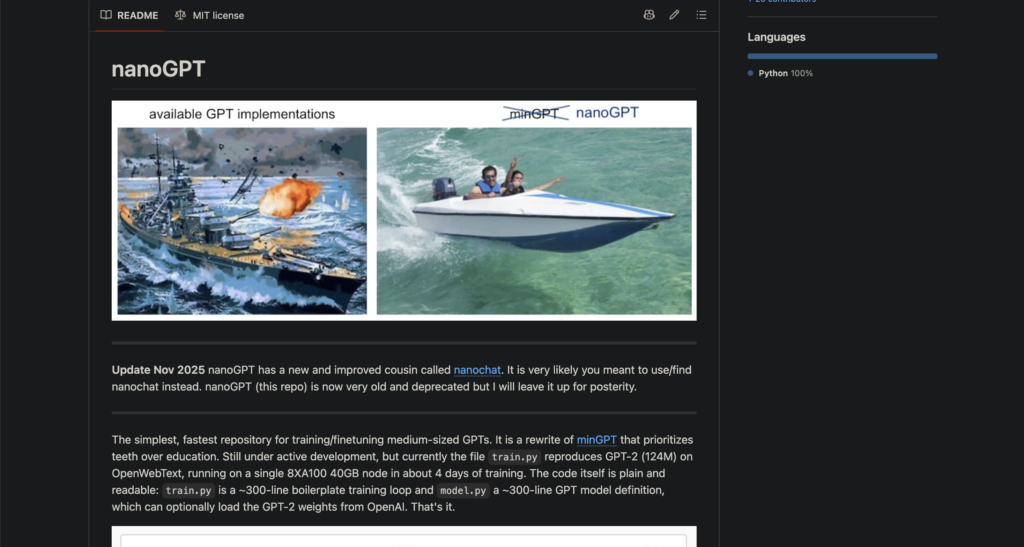
NanoGPT
NanoGPT is another project by Andrej Karpathy.
It provides a simple implementation for training and working with GPT-style language models.
The code is relatively small and easy to explore, which makes it useful if you want to understand the basic ideas behind training a language model.
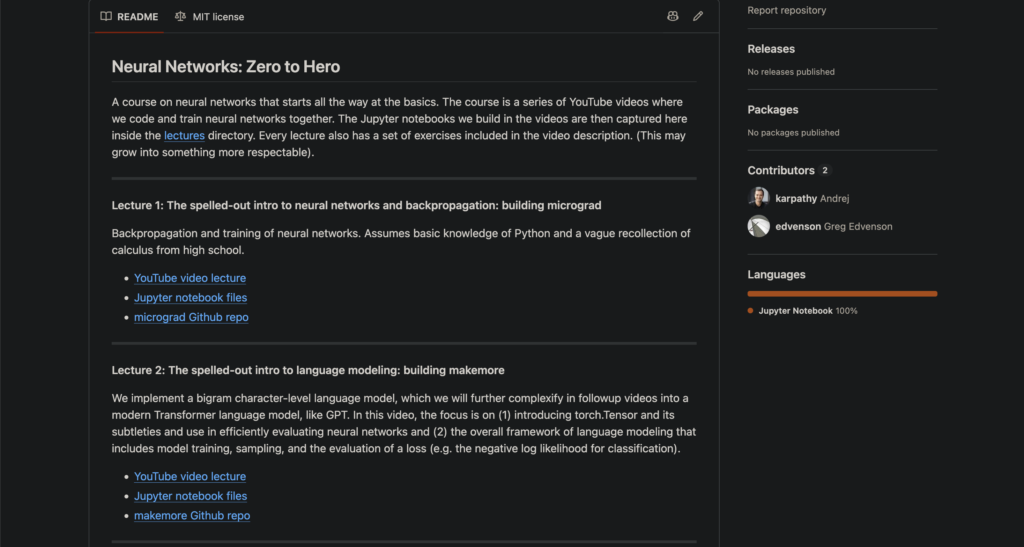
Neural Networks: Zero to Hero
Neural Networks: Zero to Hero is a course by Andrej Karpathy that teaches neural networks by building them from scratch.
You start with simple concepts and gradually move towards building a GPT-style language model.
If you want to understand what’s happening inside neural networks and language models, this is a great repository to explore.
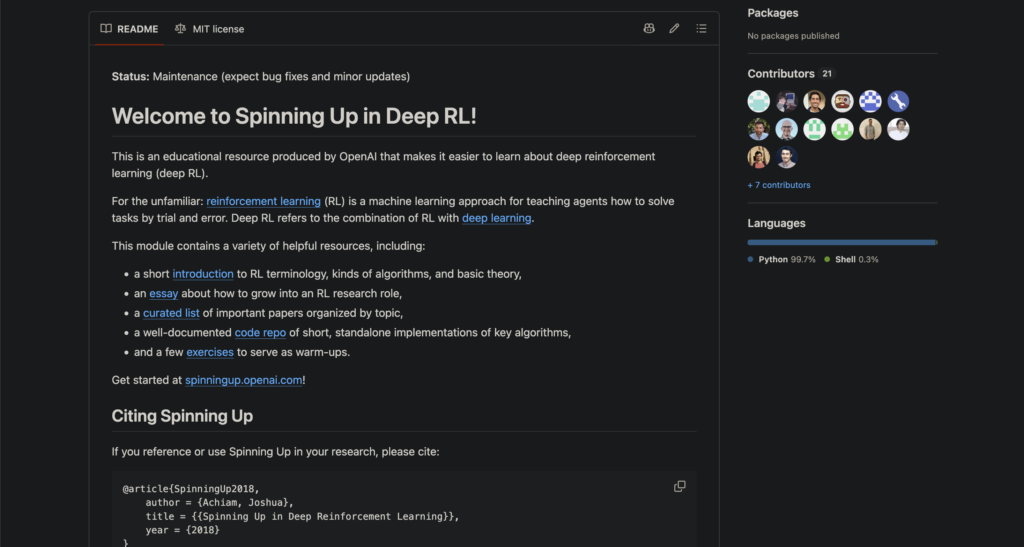
Spinning Up in Deep RL
Spinning Up is an educational resource from OpenAI that introduces the basics of deep reinforcement learning.
It includes explanations and implementations of different reinforcement learning algorithms.
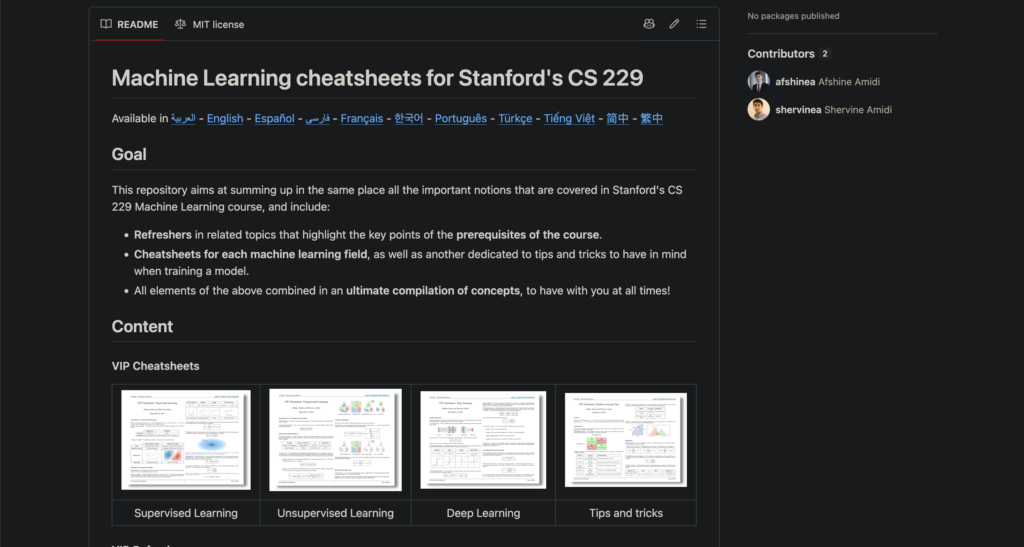
Stanford CS229 (Machine Learning)
Stanford CS229 repository contains learning materials related to Stanford’s CS229 Machine Learning course.
You’ll find lecture notes, problem sets, and other resources covering machine learning concepts.
It’s a useful resource if you want more structured material while learning machine learning.
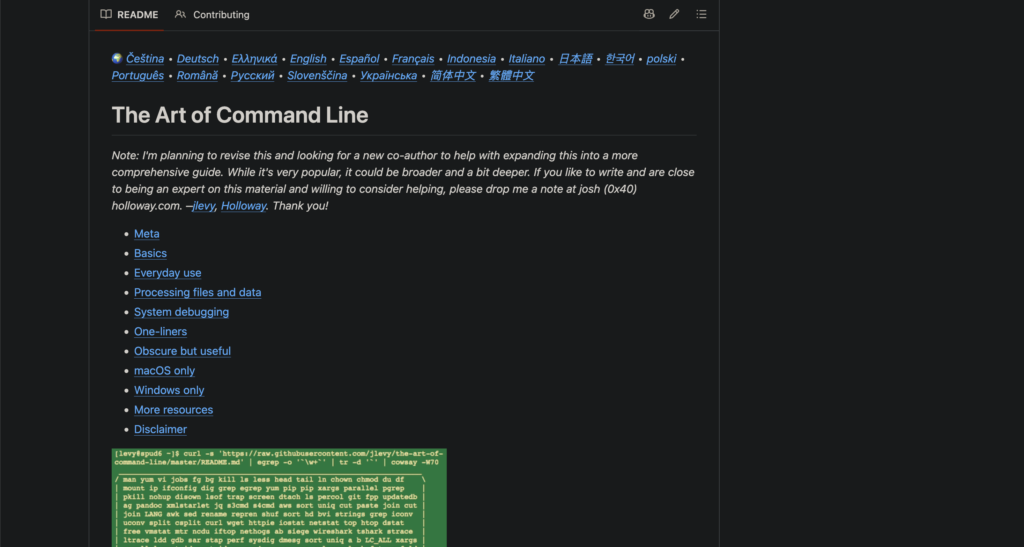
The Art of Command Line
This one isn’t specifically about AI, but it’s still useful if you’re learning AI or machine learning.
The Art of Command Line is a guide to using the terminal and command-line tools.
You’ll often use the command line when working with Python, Git, servers, and machine learning projects, so it’s a useful skill to have.
That’s all for today!
I hope you found a few repositories that you want to bookmark and explore.
If you enjoy my work and want to support what I do, buy me a coffee!
Every small gesture keeps me going! 💛
Follow me on X (Twitter) to get daily web development tips & insights.
Enjoyed reading? You may also find these articles helpful.
16 Python Libraries You Should Know